Pre-K-12 Educators have new skills and resources as a result of participating in workshop
As part of Sea Grant’s commitment to advancing both education and sustainable aquaculture, Pennsylvania, Michigan, and Ohio Sea Grant hosted a one-and-a-half-day workshop for educators, to learn the ins and outs of aquaculture and aquaponics.
Twenty-three pre-K-12 formal and nonformal educators from the three states participated in the workshop, which took place July 15th and 16th at the Tom Ridge Environmental Center (TREC) in Erie, PA. Participants included educators from pre-K to high school science, STEM coordinators, STEM curriculum specialists, and even an occupational therapist and speech pathologist.
Aquaculture and Aquaponics
The practice of aquaculture involves the breeding of fish, shellfish, algae and other aquatic organisms in natural or man-made structures, and the harvesting of these species for sale, food, and stocking. It plays a significant role in raising fish and shellfish consumed by Americans. Aquaponics is the practice of growing plants in water with fish. In this loop system, fish excrement helps grow and sustain the plants, and the plants help filter the water for the fish.


Expanding Aquaponics Education
Through a series of activities, the pre-K-12 formal and nonformal educators learned the basic principles of aquaponics, the science behind it, best practices for maintenance, and ways to bring aquaponics to their educational settings.
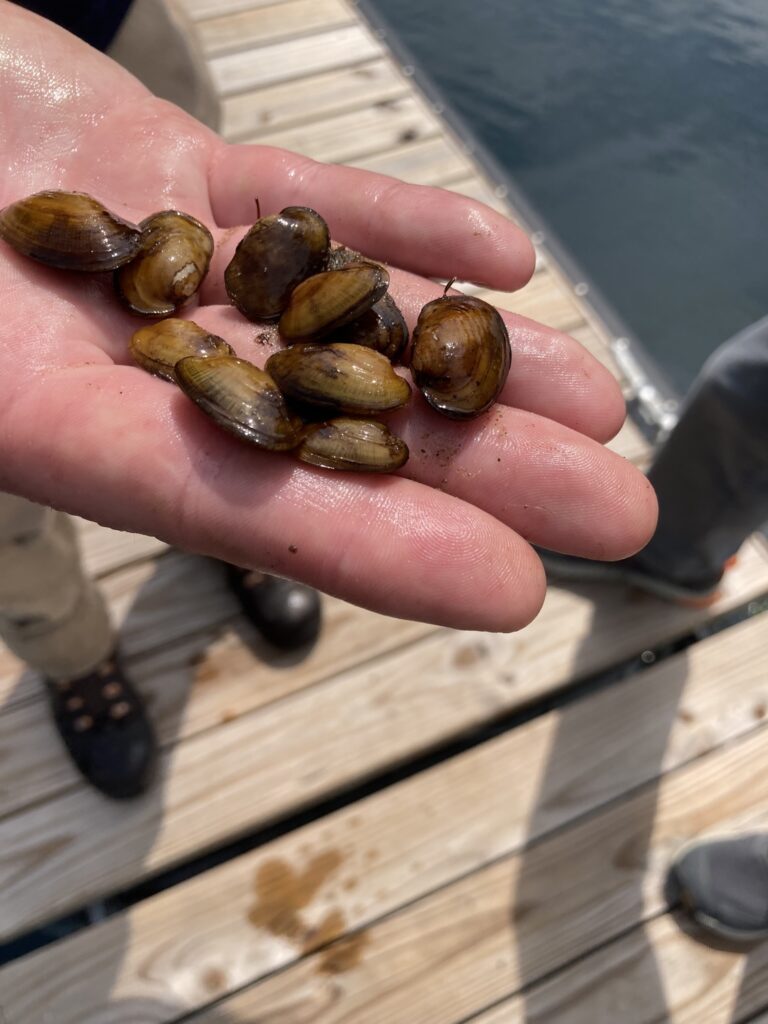
An optional pre-workshop tour of the Pennsylvania Fish and Boat Commissions’s Union City Conservation Center provided participants with a close-up view of the efforts to conserve native freshwater species in the region, such as native freshwater mussels.
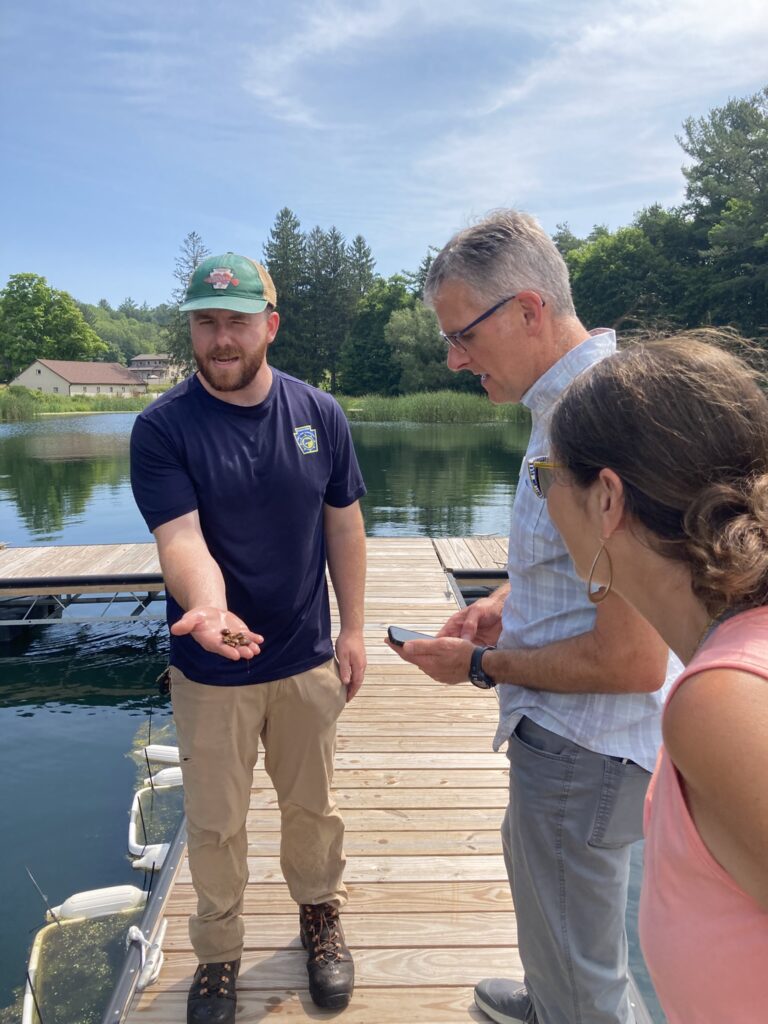

Day 1 of the workshop began with a hatchery tour, on site at TREC. Through presentations from the Pennsylvania Department of Conservation and Natural Resources staff, Sea Grant staff, and other topical experts, participants learned the basics of aquaculture, its prevalence and types of systems operating in the Great Lakes region, and the status of aquaculture across the globe.


The day wrapped up with a field experience to Grow Erie, a high-tech agriculture and aquaponics initiative in Erie to provide fresh produce, jobs, and training in a food desert area. The 17,000 square-foot commercial hydroponic and aquaponic greenhouse is run by INTAG Systems, a sustainable agricultural company. Jesse Maine led an informative tour of the company’s innovative aquaponics systems.


On day two, presentations switched to a focus on the types of plants and fish commonly used for aquaculture and aquaponics, the importance of water quality in these systems, and the role of the nitrogen cycle. Multiple hands-on activities were incorporated into the agenda, including measuring water quality and modeling the nitrogen cycle in an aquaponics system. These labs were both for educators’ own learning and to spur creative ideas for activities to incorporate into their curriculum.


Guest speaker, Donald DeMackiewicz, Integrated Pest Management Specialist at Penn State, provided educators with tangible advice on maintaining a healthy aquaponics system using scenario-based troubleshooting.
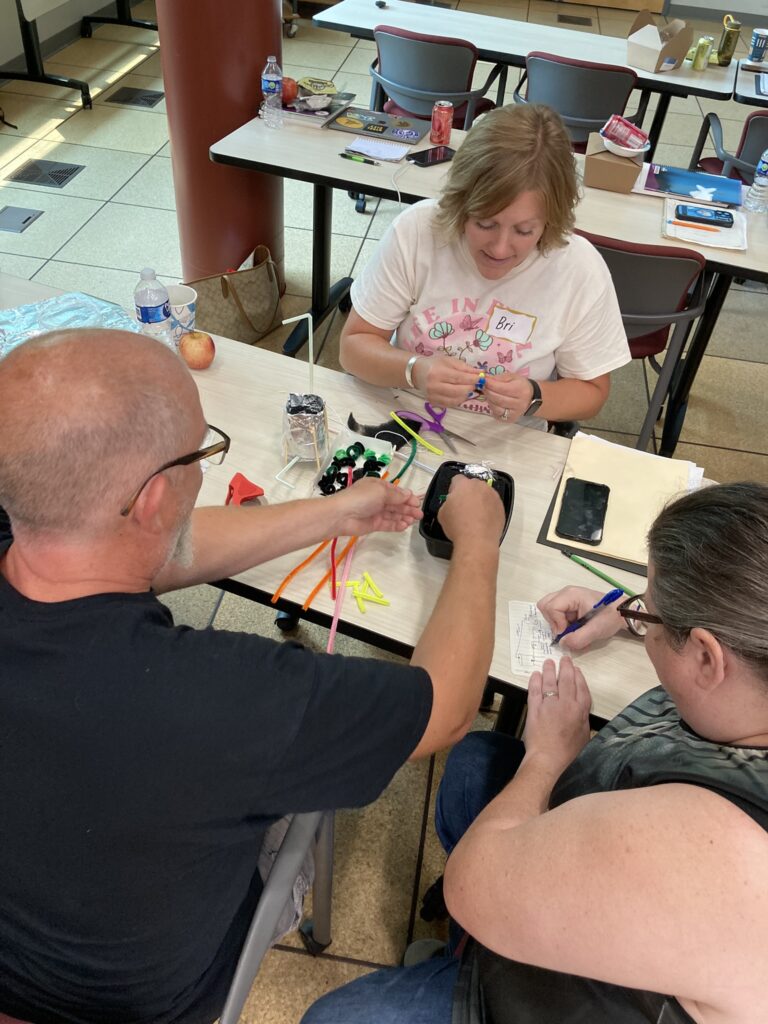
At the end of the workshop, staff assisted educators in assembling their very own take-home aquaponics system.


Educator Takeaways
An important lesson educators were encouraged to take from the workshop is how to adapt the workshop content to their learners and their setting.
Jessica Kester, a certified teacher who works as a Biology Outreach Specialist for the Science in Motion Consortium at Juniata College in Huntingdon, PA, shared her excitement about the versatility of the workshop’s content.
“The big takeaway is that aquaponics can fit into any curriculum and even be the center of the curriculum. You can teach anything from colonization of a new planet all the way down to nutrition and basic life cycles.” – Jessica
Jessica hopes to adapt the take-home aquaponics system provided into a mobile, loanable unit for teachers across all science disciplines.
Educators, with varying levels of expertise, also learned from each other. Patrick Roberts, a science teacher for Greater Latrobe School District in PA, who already incorporates aquaponics into his curriculum. He shared some unanticipated challenges and heartbreaks he and his students experienced, particularly when a power outage affected the tank temperature and an entire tank of trout were lost. They were devastated but learned from the experience. He shared that they began stocking heartier fish, bass, which are more resistant to potential and unforeseen changes.
Patrick has had an aquaponics system in his classroom for 14 years but still feels he can improve his set-up and curriculum with what he learned from the workshop.
“I am learning how to use the facility I have in new and better ways.” – Patrick
His efforts to expand upon his knowledge, both for himself and for his students, demonstrate a lesson Pennsylvania Sea Grant hopes each educator took from the experience — there is always more to learn.
This workshop was hosted in collaboration with the Youth Education in Aquaculture Initiative and funded by the Great Lakes Aquaculture Collaborative and Center for Great Lakes Literacy. Eligible educators that participated in the workshop received a $250 stipend and PA Act 48 hours.
Zach Nemec, Pennsylvania Sea Grant Outreach Specialist, organized the workshop with fellow Pennsylvania staff, Sara Stahlman, Extension Leader, and Michelle Niedermeier, Education Lead, along with Elliot Nelson, Extension Educator with Michigan Sea Grant, who developed the training and is expanding it with additional Great Lakes Sea Grant programs, and Nicole Wright, Aquaculture Extension Educator with Ohio Sea Grant.
A similar workshop will be offered by Ohio Sea Grant in 2027. If interested, contact Nicole Wright, Ohio Sea Grant at wright.1128@osu.edu.

Zach Nemec and Nicole Wright