Marine Debris
“Out of sight, out of mind” should not apply to trash.
Plastic, rubber, beverage cans and bottles, cigarette butts, and other types of trash often finds its way to our waterways, estuaries, and oceans. Once land-based, this trash is now considered “marine debris.”
Over time, some of these materials can break into smaller pieces and enter the aquatic food web, making marine debris a major threat to ecosystems and to wildlife and human health.
Pennsylvania Sea Grant works with partners across the Commonwealth to prevent marine debris, remove it from waterways, and educate others about the ways trash impacts our communities, economies, and ecosystems. Examples of our efforts include organizing and recruiting volunteers for cleanup events, providing in-person training, and offering educational resources.
Volunteer Clean-up Events
Working with partners and volunteers, Pennsylvania Sea Grant staff coordinate and participate in cleanup events along the shores and islands of the Delaware River and estuary, and along the shores of Presque Isle State Park, Lake Erie tributaries, and more. Cleanup efforts are generally organized in the spring and fall when trash is most visible due to lessened vegetation.
Staff partners with Keep Delco Beautiful, a Delaware County-based group that connects individuals with organizations and resources to conduct clean up activities. In 2025, cleanup efforts resulted in 95 volunteers removing 1,000 pounds of marine debris including 10 quarts of used motor oil.

Partners and volunteers at the Keep Delco Beautiful cleanup event in 2025
Photo credit: Delaware County Office of Sustainability
Pennsylvania Sea Grant also partners with the Penn State Extension Master Watershed Stewards, Keep Erie County Beautiful, the Northwest PA Chapter of Trout Unlimited, and other community organizations to host clean-ups in the Lake Erie watershed and add to the dataset kept by the International Coastal Cleanup. These partners have been conducting cleanups since 2021, and have removed more than 3,000 pounds of marine debris from the Lake Erie coastline.
Surveying & Recording Types of Trash
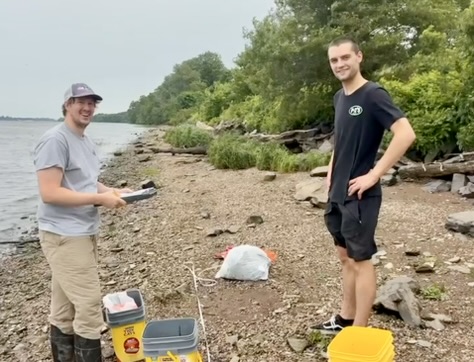
Using NOAA’s “Marine Debris Monitoring and Assessment Project” (MDMAP), Zach Nemec, coastal outreach specialist in southeastern Pennsylvania, trains volunteers how to survey and record the types and amounts of marine debris found on shorelines during clean-up events. Using the MDMAP standardized collection method, resources, and publicly available data, scientists and volunteers can detect similarities and changes – which can help inform public education, outreach, and prevention efforts.
In August 2024, Zach conducted a MDMAP training for staff of Spearhead Project Earth, a Bucks County based nonprofit that advances environmental science, education, and ecosystem restoration throughout the Delaware River watershed. They chose the Pennsylvania-side of the Burlington Bristol Bridge to conduct the training, for its proximity to traffic and public use.
Spearhead Project Earth continues to use the MDMAP protocols, collecting important data to help inform conservation efforts.


For more information about marine debris, community cleanup events, or MDMAP, contact us!