This resource is undergoing review and revisions. We hope to have it available in the near future. The introduction is pasted below.
The Purpose of This Guide
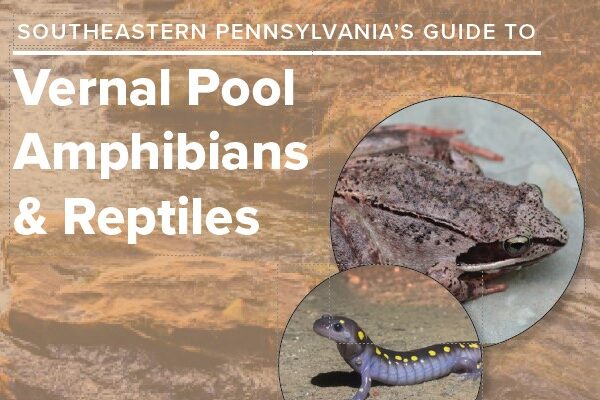
This guide is inspired by vernal pool monitoring and conservation efforts that Pennsylvania Sea Grant launched with the Delaware County Conservation District and the Penn State Extension Master Watershed Stewards Program of Delaware County. It is designed to assist natural resource professionals and individuals in understanding vernal pool ecosystems and the amphibians and reptiles which depend on them.
Amphibians and reptiles can often be seen or heard in vernal pools, which can help in identification and monitoring efforts.
When observing vernal pools or other wetland areas, please do so from a distance to protect the delicate balance and the species living in the pools. Federal and state regulations protect vernal pools and wetlands from degradation.
Please do not touch, catch, interrupt, transport, collect, take, possess anything in or around vernal pools unless holding the proper permits from federal and state agencies.
Vernal pools are complex ecosystems with unique characteristics that can make their identification challenging. Generally, they are shallow depressions which fill with water after snow melts or rain falls. These pools form naturally or can be man-made. Man-made pools are often intentionally constructed or are the result of land clearing or development.
Vernal pools are typically independent of a dedicated water source such as a stream or spring, and so, they hold water for a finite period of time. When the water evaporates or replenishes the underground aquifer, the vernal pool dries up.
These pools are a safe haven for the wildlife species that depend on them, particularly amphibians such as toads, frogs, and salamanders, and reptiles. Amphibians are particularly dependent on vernal pools, at varying stages of their life cycles. For some amphibians, referred to as indicator species, access to vernal pools is integral to their reproductive success and survival.
Indicator amphibian species, like the Wood Frog or Marbled Salamander, spend much of their lives in woodland habitats or underground. Once a year they emerge and seek out vernal pools where they will find a mate, breed, and lay their eggs. Indicator amphibian species will oftentimes return to the same vernal pools where they were born; thus, their conservation is vital to the success of indicator species.
Yet other amphibians, referred to as facultative species, do not rely exclusively on vernal pools for their reproductive success and survival. Facultative species, like the Green Frog and Red-spotted Newt, mate, breed, and lay their eggs in other kinds of aquatic ecosystems such as streams, rivers, lakes, reservoirs, ponds, marshes, and swamps.
Benefits of Vernal Pools
In addition to their importance to wildlife, vernal pools and other wetlands are important to humans. They help reduce the impacts of heavy rain events in urban and suburban areas, like those in southeastern Pennsylvania. They reduce flooding and erosion by slowing and absorbing excess rain or stormwater, and their sponge-like nature slowly filters out pollutants while replenishing underground aquifers. Vernal pools and other wetlands also help to reduce climate impacts by capturing and storing carbon dioxide.
Vernal pools and wetlands also offer a tranquil setting to observe and listen to the eloquent calls and sounds of the wildlife who gather in these dynamic ecosystems.
Conservation
Pennsylvania Sea Grant encourages the conservation of natural resources and strives to build bridges between people and science. In order to manage vernal pools accordingly, it is vital that local organizations and individuals be actively engaged in monitoring and conservation practices. To learn more or to find out ways you might be able to help, contact your local Master Watershed Steward Coordinator or Pennsylvania Sea Grant.
Threats
Despite the value of these unique ecosystems, vernal pools and wetlands are being lost. The greatest threats come from land development, climate change, and invasive species.
Land development Pennsylvania has lost over half of its historic wetlands due to land development. Clearing and replacing forested land with impervious surfaces can result in increased flow of stormwater runoff leading to a vernal pool. This increased flow carries excess sediment and pollutants, often much more than what the pools can filter and absorb. For amphibians and other wildlife, land development can mean a disruption or even blockage of the migratory pathways to vernal pools.
Climate can impact the amount of water and the duration of its availability for wildlife. This happens as a result of temperature shifts and rainfall. These changing conditions can alter the mating habits, breeding period, and the distribution of species. As species try to adapt to the changes, they may be heard and seen at unusual times and locations.
Invasive species can alter these sensitive ecosystems by outcompeting native species. Aquatic invasive plants can modify how much water is in pools, typically resulting in lower water levels. They can also outcompete native plants, becoming the dominant or sole vegetation in or around pools.